In this presentation, Anand A. Patel, MD, reviewed the contemporary standard-of-care treatment roadmap for AML in 2025, covering key phases like induction chemotherapy (eg, the “7+3” regimen), consolidation with options such as CPX-351, and the role of stem cell transplantation. He also emphasized the importance of molecular profiling and the integration of targeted therapies, such as FLT3 inhibitors, in both initial and relapse settings.
Eunice Wang, MD, chief of the Leukemia Service at the Roswell Park Comprehensive Cancer Center, discusses the outlook of acute myeloid leukemia (AML) treatment in the wake of…
In this expert interview, Arnon Nagler, MD, Chaim Sheba Medical Center, Tel-Aviv, Israel, discusses donor selection for allogeneic stem cell transplantation in secondary acute myeloid leukemia (AML) patients…
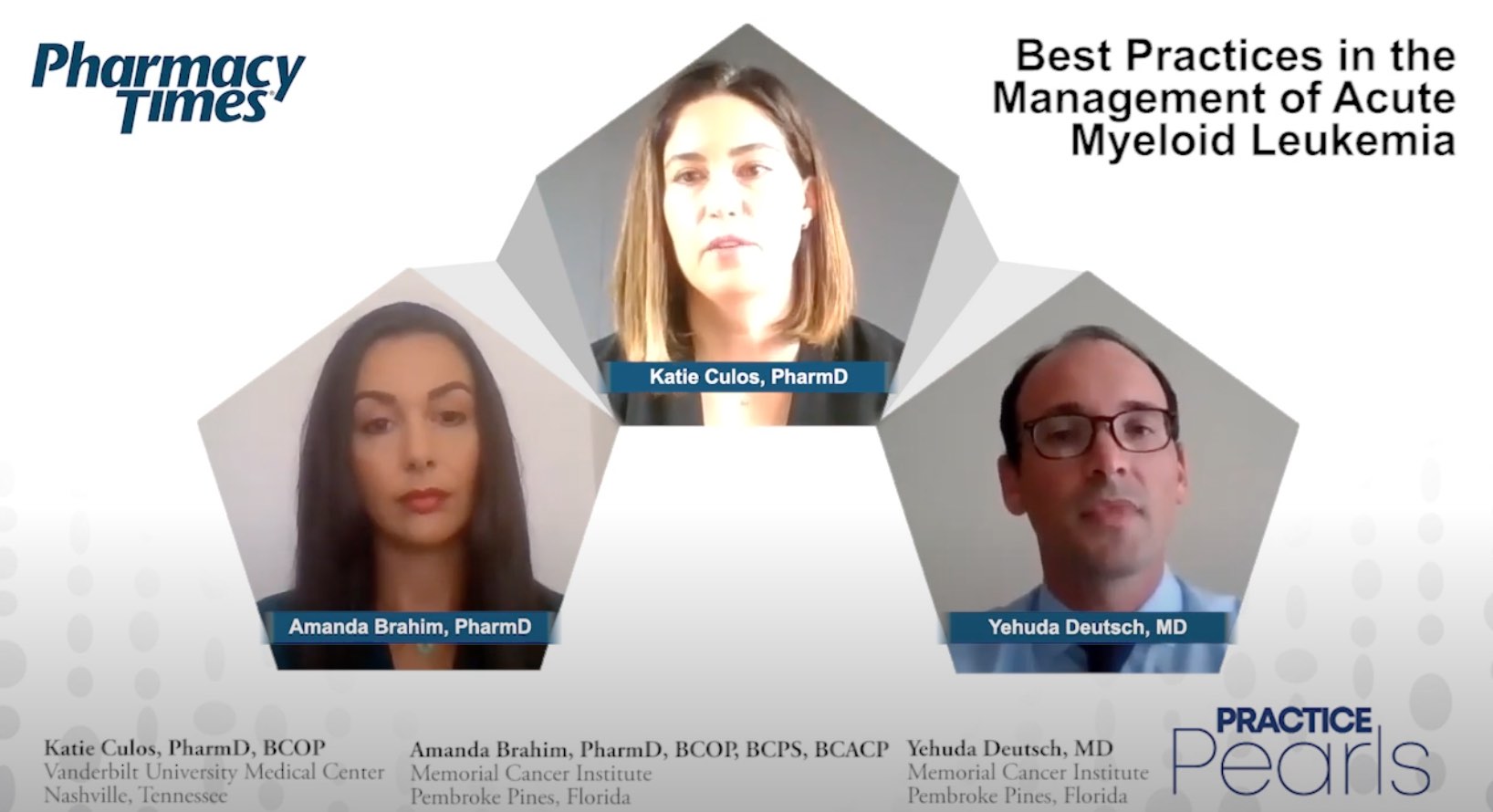
In this “Practice Pearls” webinar hosted by Pharmacy Times, expert panelists discuss important topics regarding the treatment of patients with acute myeloid leukemia (AML). Panelists: Katie Culos, PharmD,…
Naval Daver, MD, The University of Texas MD Anderson Cancer Center, Houston, TX; Joshua Zeidner, MD, UNC Lineberger Comprehensive Cancer Center, Chapel Hill, NC; Eytan Stein, MD, Memorial…
Guidelines from the American Society of Hematology (ASH) review panel recommend standards of care for individualized acute myeloid leukemia (AML) treatments. For patients with newly diagnosed AML, ASH…
In a presentation at the 2024 International Pathology Day virtual conference, Dr Justin Loke, CRUK/AACR Transatlantic Fellow, University of Birmingham, UK and Dana-Farber Cancer Institute, USA, explains how…
Ruben A. Mesa, MD, director of the Mays Cancer Center at UT Health San Antonio MD Anderson Cancer Center, discusses barriers to achieving racially diverse clinical trials for…
Jorge Cortes, MD, director of the Georgia Cancer Center in Augusta, GA, provides a comprehensive look at the current challenges specialists face in providing optimal treatment for patients…