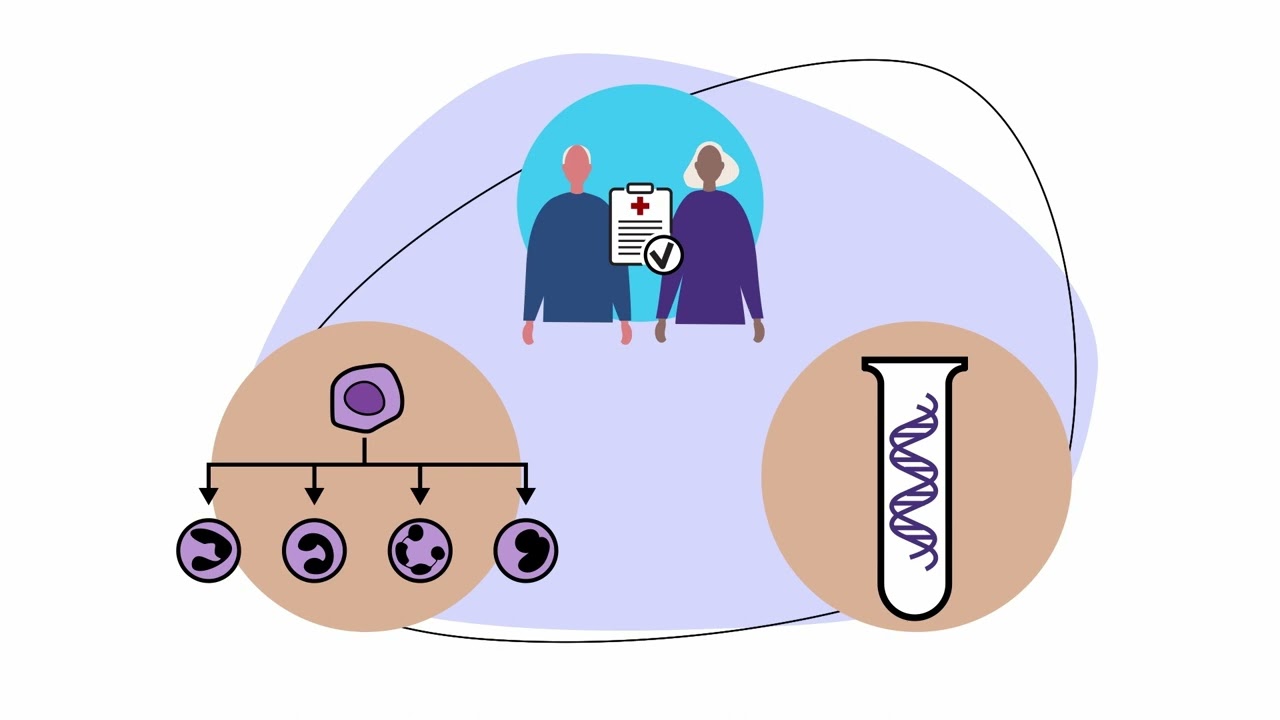
When it comes to CLL/SLL treatment, what’s the difference between BTK inhibitors and BCL-2 inhibitors? Understanding how these treatment approaches work and how they fit into the treatment…
BTK degrader BGB-16673 reduced tumor burden in 85% of patients from a high-risk, hard-to-treat group with relapsed / refractory CLL. Dr. Stephan Stilgenbauer from Ulm University and colleagues…
Nephrologist Sumeska Thavarajah, MD, of Johns Hopkins, discusses the complications of kidney disease. Kidney disease can affect the body’s ability to filter blood, balance chemicals, and can lead…
Alp Ikizler, MD, of Vanderbilt University Medical Center, discusses the issue of obesity in the context of chronic kidney disease (CKD) and dialysis. Dr Ikizler emphasizes the importance of…
Fouad Chebib, MD, a Mayo Clinic nephrologist and expert on polycystic kidney disease, discusses the use of artificial intelligence (AI) in predicting kidney failure in patients with polycystic…
Amira Abdelrasoul, PhD, PEng, is an associate professor in the Department of Chemical and Biological Engineering and the Division of Biomedical Engineering at the University of Saskatchewan. She…
Chronic kidney disease often goes unnoticed until it reaches an advanced stage. Early detection can help treat and prevent the disease before it necessitates dialysis or kidney transplantation.…
Sheeram Akilesh, MD, PhD, discusses spatial transcriptomics and its application in studying kidney disease. He explains the concept of spatial transcriptomics, which involves deeply interrogating a tissue section…
Nephrologist Sumeska Thavarajah, MD, of Johns Hopkins, discusses the management of chronic kidney disease. She explains that medications are prescribed to treat risk factors that can speed up…
Terry J. Watnick, MD, professor of neurology and director of Maryland PKD Clinical Center of Excellence, explains that polycystic kidney disease (PKD) is a genetic disorder that causes…