How State Data Reveal Gaps in Atopic Dermatitis Care Access
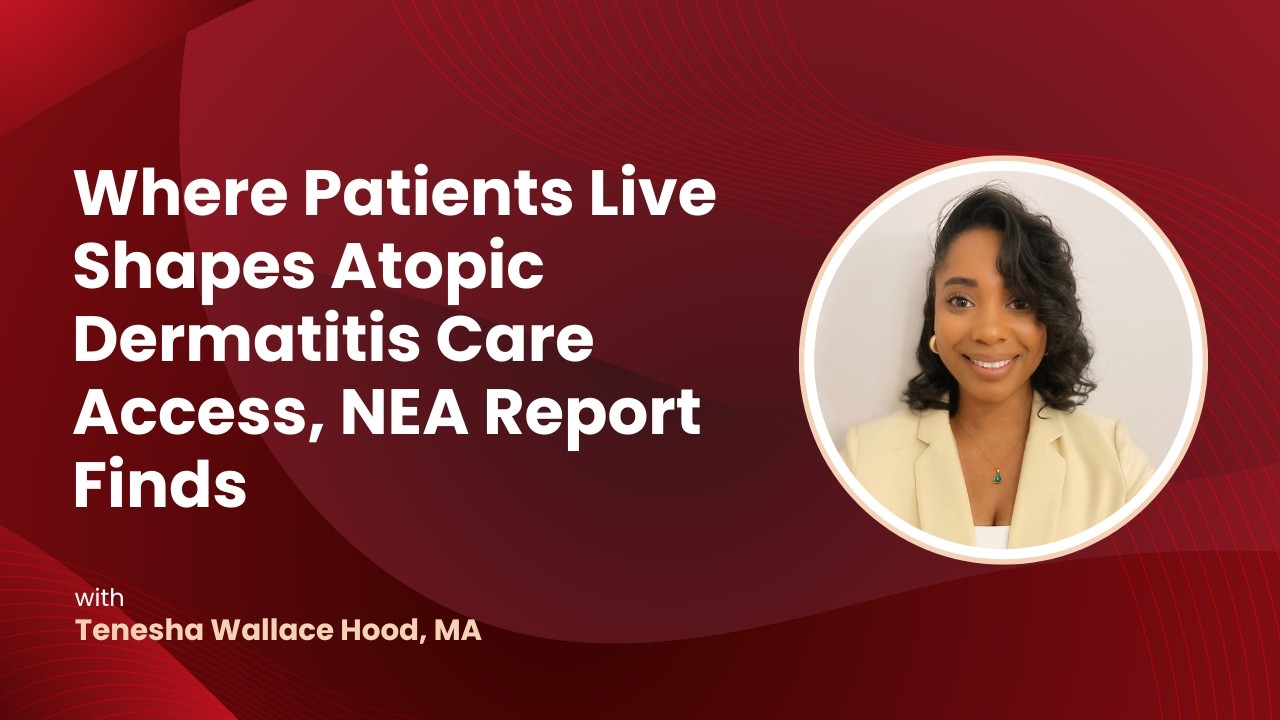
Tenesha Wallace Hood, MA, of the National Eczema Association explains how where patients live shapes atopic dermatitis care access, based on findings from the State of AD 2026 National Indicator Report. Learn what state-level variation in specialist density means for patients, clinicians, and policymakers.
In this interview, Wallace Hood, director of healthcare provider engagement at NEA, discusses the report’s finding of substantial variation in dermatology, allergy, immunology, and practitioner density across states. About 13% of Americans lived in a county without one of those specialists. She notes AD care remains overwhelmingly in person, with telehealth representing 1% of dermatology visits for AD in 2023, and describes what this means for patients: longer travel, longer waits, and fewer specialty care options.
Wallace Hood also explains how the data can prompt exam room conversations about whether a patient’s current care is working, and how health systems, public health professionals, payers, and policymakers can use state-level findings to examine workforce, access, and coverage. She shares NEA’s plans to expand education and healthcare professional engagement, including practical resources for providers who see eczema outside of dermatology, and encourages viewers to use the state briefs created for every state and Washington, DC, to identify local opportunities for timely action on AD care access.